
At The Ohio State, I continued to explore the intersection of evolutionary genomics and conservation biology, shifting my focus from birds to reptiles. I worked with Dr. H. Lisle Gibbs in the Department of Evolution, Ecology, and Organismal Biology (EEOB), where my projects centered on federally endangered Eastern Massasauga rattlesnakes.
My work addressed questions about how small, isolated populations maintain genetic health, and how functional and neutral genetic diversity interact in the face of demographic decline. We used population genomic data from rattlesnakes to evaluate a hotly debated question in conservation genetics, “can neutral markers reliably inform functional diversity?”. Our findings, published in PNAS, provided a nuanced perspective: neutral and functional diversity are indeed correlated, but the strength of that correlation might decrease due to recent demographic declines.
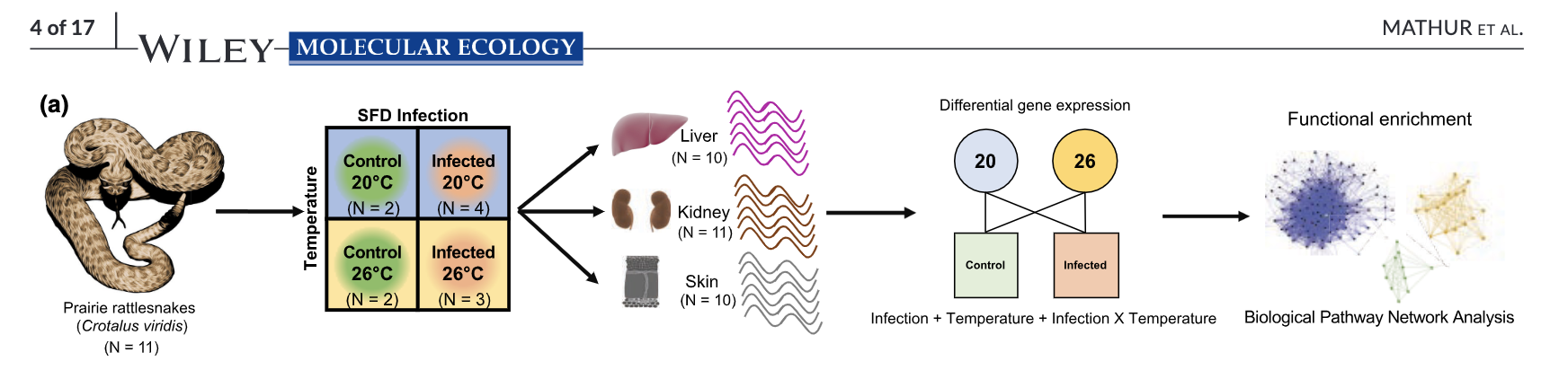
In parallel, I led an RNAseq project exploring immune response variation in rattlesnakes exposed to Ophidiomyces ophidiicola, the fungal pathogen responsible for snake fungal disease. This work advanced our understanding of wildlife disease susceptibility and host-pathogen dynamics using transcriptomic data.
Beyond research, this postdoc shaped me as a mentor, communicator, and collaborator. It also reinforced my passion for translating high-throughput genomic data into insights that matter for real-world biological challenges—a passion that ultimately led me into cancer genomics and bioinformatics at the National Cancer Institute.